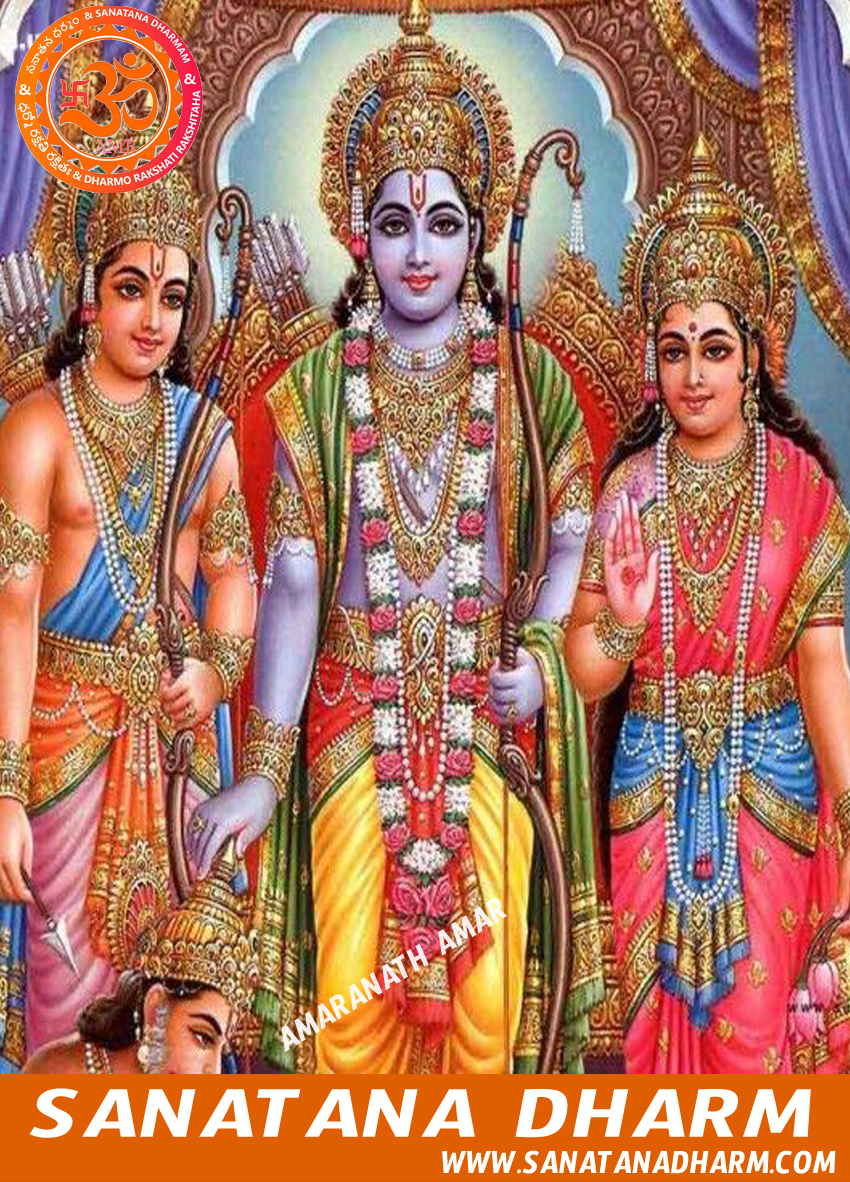
Sita, who speaks kindly and deserves kind utterances, after hearing Rama's words, became angry out of love alone and spoke thus to her husband.
सीता, जो प्रिय के योग्य और प्रिय वचन बोलने वाली थीं, इस प्रकार कहे जाने पर प्रेमवश क्रोधित होकर अपने पति से बोलीं।
Ayodhya Kanda – Sarga 27 · v2
किमिदम् भाषसे राम वाक्यम् लघुतया ध्रुवम् |
त्वया यदपहास्यम् मे श्रुत्वा नरवरात्मज || २-२७-२
Oh, Rama the prince! What words these are you speaking? These light words certainly are to be laughed at by you and to me after hearning.
हे राम, तुम यह क्या कह रहे हो? यह निश्चित रूप से एक तुच्छ बात है। हे नरश्रेष्ठ के पुत्र, इसे सुनकर मुझे हँसी आ रही है।
Ayodhya Kanda – Sarga 27 · v3
आर्य पुत्र पिता माता भ्राता पुत्रः तथा स्नुषा |
स्वानि पुण्यानि भुन्जानाः स्वम् स्वम् भाग्यम् उपासते || २-२७-३
"Oh, noble prince! Father, mother, brother, son and daughter-in-law accomplish their own good fortune, as benefitted by their own pious deeds."
यह श्लोक बताता है कि पुत्र, पिता, माता, भाई, पुत्रवधू आदि सभी अपने-अपने पुण्य कर्मों के फल का भोग करते हुए अपने-अपने भाग्य का अनुसरण करते हैं। वे अपने कर्मों के अनुसार सुख-दुःख प्राप्त करते हैं।
Ayodhya Kanda – Sarga 27 · v4
भर्तुर् भाग्यम् तु भार्या एका प्राप्नोति पुरुष ऋषभ |
अतः चैव अहम् आदिष्टा वने वस्तव्यम् इति अपि || २-२७-४
"Oh, Rama the best of men! Wife for one gets fortune of the husband. For that reason, I am also destined to dwell in the forest."
पति का भाग्य ही पत्नी का भाग्य होता है, हे पुरुष श्रेष्ठ।
इसीलिए मुझे वन में रहने का आदेश दिया गया है।
Ayodhya Kanda – Sarga 27 · v5
न पिता न आत्मजो न आत्मा न माता न सखी जनः |
इह प्रेत्य च नारीणाम् पतिर् एको गतिः सदा || २-२७-५
" To a woman, father or son or self or mother or female companion are not the recourse. Husband alone is forever the best recourse either in this world or after her death".
यहाँ संस्कृत श्लोक का सरल हिंदी अनुवाद दिया गया है: न पिता, न पुत्र, न आत्मा, न माता, न सखी-जन, स्त्री के लिए इस लोक और परलोक में पति ही सदा एकमात्र सहारा है।
Ayodhya Kanda – Sarga 27 · v6
यदि त्वम् प्रस्थितः दुर्गम् वनम् अद्य एव राघव |
अग्रतः ते गमिष्यामि मृद्नन्ती कुश कण्टकान् || २-२७-६
"Oh, Rama! If you set forth now itself to the forest, which is difficult to be travelled, I shall come before you, by trampling down thorns and grass with long pointed stalks."
हे राघव, यदि तुम आज ही दुर्गम वन की ओर प्रस्थान करोगे, तो मैं तुम्हारे आगे-आगे चलकर काँटों और कंकड़ों को कुचलती हुई मार्ग बनाऊँगी।
"Oh, brave man! By abandoning, as water left over after drinking, the impatience and anger and having faith, take me. There is no sin in me."
ईर्ष्या और क्रोध को बाहर निकालकर, बचे हुए जल की तरह, हे वीर, मुझे विश्वास के साथ ले चलो, क्योंकि मुझमें कोई पाप नहीं है।
Ayodhya Kanda – Sarga 27 · v8
प्रासाद अग्रैः विमानैः वा वैहायस गतेन वा |
सर्व अवस्था गता भर्तुः पादच् चाया विशिष्यते || २-२७-८
"Protection under the feet of the husband is better than being on top of a lofty building or in aerial cars or in moving through the sky or in attaining all types of positions."
महल की चोटियों से, विमानों से या आकाश मार्ग से भी, हर अवस्था में पति के चरणों की छाया सबसे श्रेष्ठ है।
Ayodhya Kanda – Sarga 27 · v9
अनुशिष्टा अस्मि मात्रा च पित्रा च विविध आश्रयम् |
न अस्मि सम्प्रति वक्तव्या वर्तितव्यम् यथा मया || २-२७-९
"My mother and father taught me of different matters long ago. I need not be told now, how to deal in any way with anyone."
मेरी माँ और पिता ने मुझे बहुत कुछ सिखाया है, इसलिए मुझे पता है कि मुझे कैसे व्यवहार करना चाहिए। मैं अभी कुछ भी कहने की स्थिति में नहीं हूँ, मुझे वही करना चाहिए जो मुझे सिखाया गया है।
"Oh, brave man! performing service to you regularly, having the necessary discipline, observing chastity, I would like to stay with you in the forests which smell like honey."
हे वीर, जो नित्य तुम्हारी सेवा करती हुई, ब्रह्मचर्य का पालन करने वाली है, मैं तुम्हारे साथ वन में मधु की सुगंध के बीच विहार करूँगी।
Ayodhya Kanda – Sarga 27 · v13
त्वम् हि कर्तुम् वने शक्तः राम सम्परिपालनम् |
अन्यस्य पै जनस्य इह किम् पुनर् मम मानद || २-२७-१३
"Oh, Rama, the bestower of honour! Here in the forest, you are indeed capable of protecting other people also. Why to tell about my protection?"
हे राम, आप ही वन में प्रजा का पालन करने में समर्थ हैं, तो फिर मेरे जैसे अन्य व्यक्ति की तो बात ही क्या है।
I shall be comfortable, by coming together with you, the courageous man. I desire to see lotus- ponds filled with swans, water-fowls and excellently flowered.
हंसों और कारण्डवों से भरी, सुंदर खिले हुए कमल वाली यह झील, हे वीर, तुम्हारे साथ मिलकर देखने में बहुत सुखद है।
I shall proceed to the forest, which is very much inaccessible and occupied by monkeys, elephants as well as other animals. Clining to your feet alone, I shall dwell in the forest as though in father's home.
मैं अत्यंत दुर्गम वन में जाऊँगा, जहाँ अनेक मृग, वानर और हाथी हों। मैं वहाँ अपने पिता के घर की तरह ही रहूँगा, आपके चरणों को पकड़कर, हे प्रिय।
"Therefore, grant well my prayer and usher me- me without any other thought, whose mind is fondly attached to you and who am determined to die if separated from you. Due to this, there will be no burden to you from me."
हे प्रिय, मैं तुम्हारे बिना जीवित नहीं रह सकती, इसलिए मुझे अपने साथ ले चलो। मेरी यह प्रार्थना स्वीकार करो, इससे तुम्हें कोई कष्ट नहीं होगा।
Ayodhya Kanda – Sarga 27 · v23
तथा ब्रुवाणाम् अपि धर्म वत्सलो |
न च स्म सीताम् नृ वरः निनीषति |
उवाच च एनाम् बहु सम्निवर्तने |
वने निवासस्य च दुह्खिताम् प्रति || २-२७-२३
sita along with him eventhought she was speaking as a foresaid. To hold her back from coming to forest, he also started talking highly of the various afflictions she might have to face in a forest.
हे धर्मप्रिय पुत्र, ऐसा कहने पर भी वह श्रेष्ठ राजा उसे ले जाने को तैयार नहीं हुआ। उसने उसे बार-बार वन में निवास के दुख का स्मरण कराया।